Can Bitcoin Save the Crypto Bull Run With This Weekly Close?
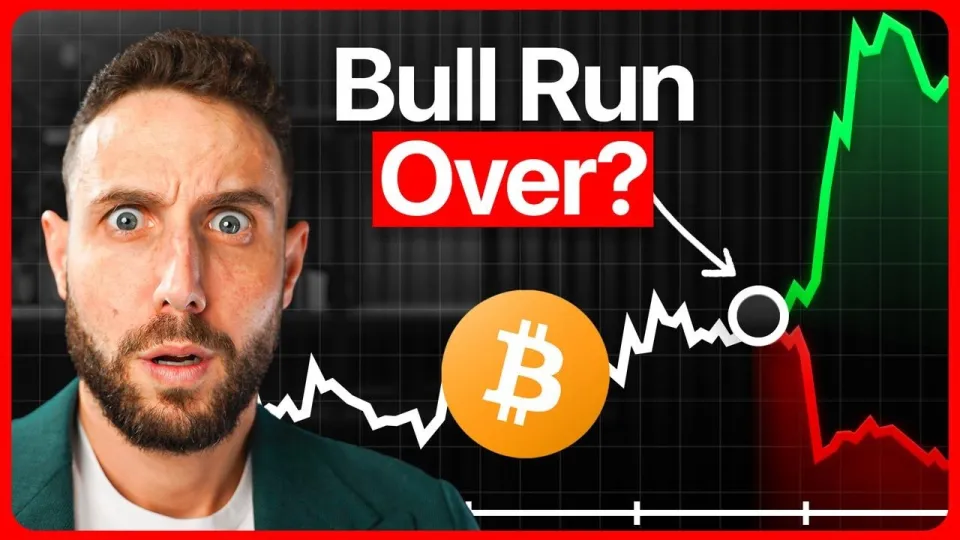
Video: Bitcoin Has 2 DAYS to Save the Crypto Bull Run
Want articles like this for your own video to promote it on YouTube and Google? Order them through the Telegram bot @sat_sit_bot. The bot writes and publishes the articles itself (with your YouTube video embedded) on popular topical websites (no ads). Free trial — 50 articles.
· based on the channel EllioTrades
Key takeaways
- Bitcoin's weekly close is framed as the deciding event for whether the crypto bull run survives or the market shifts bearish.
- The trading plan centers on whether BTC holds support; if it does, the author is looking to buy select altcoins.
- A break of support would invalidate the bullish setup and shift focus to lower levels rather than new longs.
- Sentiment has flipped fast: one retrace was enough to turn much of the market from very bullish to bearish.
- Traders are also watching a pending MSCI decision on digital asset treasury companies such as MSTR as a separate catalyst.
Bitcoin's next weekly close is the single most important near-term event for the crypto market, and whether it holds support will likely decide if the bull run continues or flips into a deeper correction. The setup is binary: a strong close keeps the uptrend intact and opens the door to buying altcoins on strength, while a breakdown argues for caution and lower targets. Traders positioning around this decision can also use prediction markets for event-based exposure, for example through the Kalshi sign-up offer that gives new users a bonus on their first trade.
Why the weekly close matters more than any single daily candle
A weekly close is the price the market accepts after five days of competing flows, and it filters out the noise of intraday wicks that stop out leveraged traders. For Bitcoin, the weekly timeframe is where the broader trend has historically been defined: a close above support keeps higher lows intact, while a close below it signals that sellers have taken control of the auction. That is why the framing of a two-day window is not clickbait but a description of how much time is left before the candle resolves. Daily volatility can look dramatic, but it is the weekly settlement that algorithms, fund managers and swing traders use to adjust exposure. If Bitcoin closes the week above the level in question, the path of least resistance stays up and the bull run survives another test; if it closes below, the burden of proof shifts to the bulls.
The trading plan: levels, confirmation and invalidation
The plan is built around support holding, with entries only after confirmation rather than in anticipation. In practical terms, the sequence looks like this:
- Watch the weekly candle into the close and note whether price settles above or below the key support zone.
- If support holds, treat the retrace as a buying opportunity in BTC first, then rotate into altcoins with relative strength.
- If support breaks, stand aside and wait for a reclaim instead of catching a falling knife.
- Size positions so that a failed setup costs a small, predefined amount rather than forcing an emotional exit.
The logic behind buying strength rather than weakness is that confirmation raises the probability of the trade working, even if the entry price is worse. A market that has to be bought higher is a market where the bull case is being validated by price itself.
Which altcoins are in play if Bitcoin holds
The altcoin side of the plan depends entirely on Bitcoin not breaking down, because most large-cap alts still trade as leveraged beta to BTC. The approach is to focus on coins that have held their own support during the retrace, show rising volume on bounces, and have a clear catalyst rather than simply being down the most. Names discussed in the broader market conversation, including Near Protocol, Zcash and newer privacy-themed projects, come up repeatedly among viewers, but the selection rule should be relative strength plus liquidity, not narrative alone. Shorting a beaten-down alt near support is the mirror image of the same mistake: it looks attractive after a drop but offers poor risk-reward once sellers are exhausted. If BTC confirms, the highest-quality alts tend to lead the bounce, and those are the ones worth owning.
Sentiment whiplash and the case against waiting for a deeper crash
One retrace was enough to flip a large part of the market from very bullish to openly bearish, which is a classic feature of leveraged, sentiment-driven crypto cycles. Two arguments dominate the pushback. First, hoping for a major setback to buy cheaper can be self-defeating: if the bull case is real, the market simply does not offer that discount, and waiting means buying higher or missing the move entirely. Second, a very short bear market would likely produce a weaker subsequent bull phase, because the excess leverage and weak hands never get fully flushed. A confirmed uptrend with higher prices is a better probabilistic environment than a broken one with cheaper entries, even if the entry feels less comfortable.
Risks beyond the chart: MSCI, market makers and weekend liquidity
Price is not the only variable that can decide the outcome. A pending MSCI decision on whether to delist digital asset treasury companies such as MicroStrategy from global indexes is a genuine structural catalyst, because index-driven flows are mechanical rather than sentiment-driven. Liquidity is another factor: weekends thin out order books, market makers step back, and retail flow alone rarely produces a durable reversal, which is why a Sunday or Monday move can be misleading until the weekly close confirms it. Macro is a third risk; if equities have not yet corrected, a broad risk-off wave can drag crypto down regardless of how clean the BTC chart looks. The realistic bear scenario is a sweep of the high-90s followed by a wide range rather than a clean continuation, and position sizing should respect that possibility.
Common questions and doubts from traders
Viewers raise several recurring concerns that are worth separating from the chart itself. Some argue that shorting Near is a poor call given how much it has already fallen, which is a fair point about late entries into oversold names. Others ask for more precision on what counts as a buying opportunity, because "wait for a dip" is meaningless without numbers; a defined percentage retracement or a specific support level is required. There is also skepticism about the whole exercise, with some arguing that crypto is a poor store of value for most participants and that rallies exist mainly to provide exit liquidity. These are not arguments to dismiss, but they are risks to price in rather than reasons to ignore the setup.
Tools and links mentioned in the breakdown
- Kalshi sign-up with a $50 bonus after a $50 trade
- Liquid trading with 10% off fees
- WEEX deposit promotion with bonuses up to $4,000 on a $100 deposit
- fomo public trading journey
- EllioTrades on X
Bottom line
Bitcoin's weekly close is the decision point that determines whether the bull run continues or the market enters a deeper corrective phase, and the plan is to act on confirmation rather than prediction. If support holds, the playbook is to buy BTC and then rotate into the strongest altcoins; if it fails, patience and capital preservation take priority. Sentiment has already flipped once on a single retrace, which is a reminder that price, not mood, should drive decisions. For the full walkthrough of the levels and the altcoin watchlist, see the breakdown by EllioTrades, and if you want event-based exposure around this decision, you can trade $50 and get $50 on Kalshi.
Source: Bitcoin Has 2 DAYS to Save the Crypto Bull Run · Markdown version
Questions & answers
What exactly makes this Bitcoin weekly close so important?
A weekly close reflects where the market settles after five days of trading, so it filters out intraday wicks and stop hunts. If Bitcoin closes above key support, the higher-low structure stays intact and the bull case remains valid. A close below it shifts the burden of proof to buyers and raises the odds of a deeper correction.
Should I wait for a bigger crash to buy Bitcoin and altcoins cheaper?
Waiting for a deep discount can backfire if the bull trend is intact, because the market may never offer that price and you end up buying higher or not at all. A confirmed uptrend with higher prices carries better probabilities than a broken one with cheap entries. The trade-off is paying up for confirmation instead of guessing a bottom.
Why not short altcoins like Near after such a large drop?
Shorting an asset that has already fallen sharply often means entering near support, where risk-reward is poor and a bounce can be violent. Late shorts also crowd the same side of the trade, which makes squeezes more likely. If Bitcoin holds, beaten-down alts with relative strength tend to bounce hardest.
What non-price risks could derail the bullish setup?
A pending MSCI decision on delisting digital asset treasury companies such as MicroStrategy from global indexes could trigger mechanical selling. Thin weekend liquidity and market makers stepping back can also distort moves until the weekly close. A broader equity correction remains a macro risk that crypto would likely follow.